
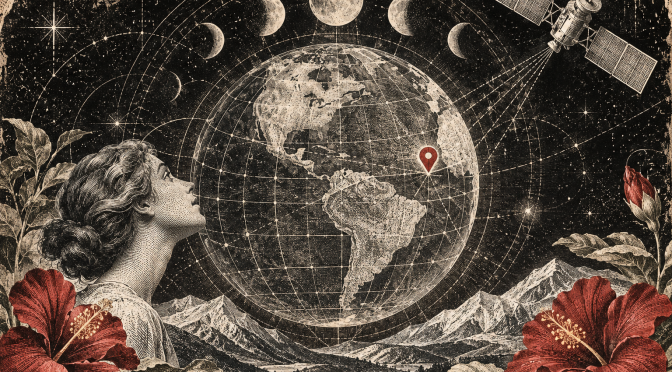
What if you could locate any place on Earth using just three words?
Not a street address. Not a ZIP code. Not a complicated set of GPS coordinates.
Just three words.
I recently came across a fascinating technology called what3words, which has divided the entire planet into approximately 57 trillion squares, each measuring just 3 × 3 meters (about 10 × 10 feet).
Every single square has been assigned its own unique combination of three words.
Think about that for a second. Every corner of the planet—from the middle of the Sahara Desert to a specific entrance of a building—has its own three-word address.
How Does It Work?
What3words uses a geocoding algorithm to convert geographic coordinates into three-word combinations.
For example, an address might look something like:
///writings.restriction.clubs
The three words aren’t descriptions of the location. They’re assigned by an algorithm and permanently associated with a particular square.
Rather than replacing GPS, what3words makes precise coordinates easier for humans to communicate, remember, and share.
You can enter the words into the website or app and immediately see the corresponding location on a map.
And here’s something especially interesting: the app can identify your three-word location using GPS even without cellular service or internet access, although sharing it still requires a way to communicate.
Where Could This Technology Be Useful?
The applications go well beyond simply finding your way around.
- Emergency response: Imagine getting lost while hiking or needing medical assistance somewhere without a street address. Three words could help rescuers pinpoint your location, provided the responding service supports the system.
- Travel and exploration: Find an exact meeting spot on a beach, in a forest, or at a crowded festival.
- Deliveries: Direct a driver to a particular gate, entrance, or drop-off point instead of an entire property.
- Disaster relief: Help coordinate supplies and assistance in areas where conventional addresses are missing or infrastructure has been damaged.
- Technology and robotics: Integrate precise location references into navigation systems, mapping software, and potentially autonomous delivery technology.
The Bigger Picture
What fascinates me most is how this technology changes our relationship with location.
For centuries, we’ve organized the world around streets, cities, borders, and landmarks.
But what happens when every tiny piece of the planet becomes individually identifiable?
It opens up some interesting possibilities for navigation, accessibility, emergency preparedness, and the way humans interact with geographic information.
Of course, there are limitations. GPS isn’t always accurate, similar-sounding words can cause confusion, and what3words is a proprietary system rather than an open geographic standard. It’s also not a substitute for conventional emergency-location procedures.
Still, it’s a pretty fascinating example of how a relatively simple idea can transform the way we communicate something as fundamental as where we are.
Find Your Three Words
Curious what three words correspond to your favorite place on Earth?
Visit what3words.com and explore the map.
Find your home, your favorite hiking trail, or somewhere you’ve always dreamed of visiting.
Three words. One precise location. An entire planet to explore.
Do you wonder?